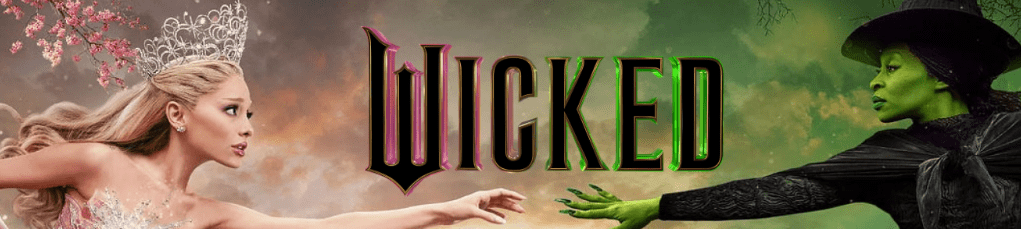
In this era, adaptations are circulating across multiple platforms. From books, to films, all the way to tv shows and music, adaptations are seen everywhere. Because of this, it would make sense for something such as a T-shirt or a tote bag to become its own narrative towards a text, changing and developing the ways in which we choose to engage with these stories. Understanding the role that tie-in merchandise plays when it comes to adaptation is crucial to understanding how we perceive the materials that have been adapted. The NBC Wicked Merchandise webpage functions not only as a commercial extension of Jon. M Chu’s films Wicked and Wicked: For Good but as an adaptive text in its own way, shaping how the consumer understands, visualizes, and relates to the Ozian retelling. Applying Kamilla Elliotts theory of ‘tie-in merchandise’ or ‘intertextuality’ as a type of industrial engagement that alters the narrative of the story being told from the source text, this essay argues that the Wicked merchandise webpage becomes its own adaptation of the Wicked films, one that reinforces and reconsiders the characters and the setting. Examining the website closely – such as its amplification of Glinda and her pink, bubbly aesthetic and its transformation of magical objects into obtainable everyday items – this essay works to demonstrate how commercial objects become interpretive lenses that guide consumers into particular readings of Oz. Placing this webpage and its merchandise within the history of Ozian narratives, this analysis reveals how NCB’s tie- in merchandise perpetuates and complicates Wicked and Wicked: For Goods complex themes for a mass audience. Overall, the NBC Wicked merchandise webpage reveals how the films Wicked and Wicked: For Good can expand into consumer culture by using material goods that work to reinterpret and critique the culture of Oz through significant visual representations.
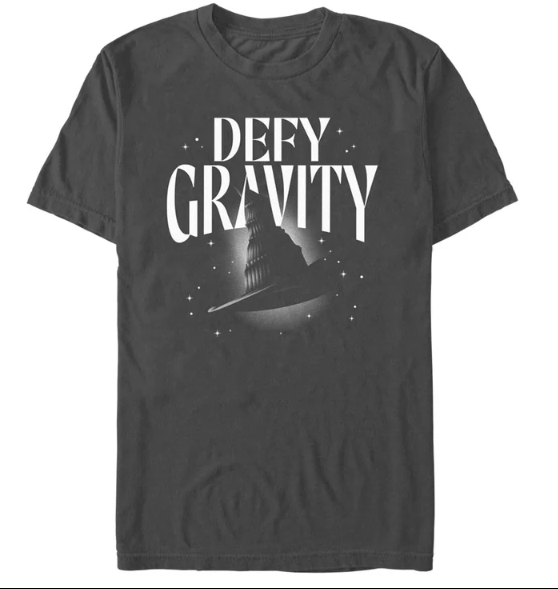
The NBC Wicked Merchandise webpage functions as its own adaptation, and Kamilla Elliott’s concept of tie-intertextuality helps explain how this transformation occurs. Elliott defines ‘tie-in merchandise’ as being “an economic as well as semiotic and aesthetic mode of adaptation” (Elliott 195) while also being an “idealized materialism beyond the audiovisual senses engaged by the film” (Elliott 201). Elliott is arguing that merchandise adapts stories on multiple levels and economically exists to generate a profit. Semiotically, it reworks the story through symbols and slogans that are aesthetically placed for a certain presentation. The webpage does not only sell objects—it reassigns meaning to Elphaba’s green skin and Glinda s pastel glamour. It converts these concepts from the film and makes them its identities that can be sold for the consumer to wear, extending these themes beyond the audiovisuals of the films. This provides a lens into understanding how the NBC Wicked merchandise webpage participates in reshaping this Oz for its audience. Elliott argues that tie-in merchandise “is not simply a process of absorption and mixing; it is both a process of incorporating its imagery, brand, and ideology into an array of media’ (Elliott 196). To simplify, Elliott argues that tie-in merchandise doesn’t just reference its source text but rather incorporates select themes that become differently meaningful in their new forms. This creates what can be recognized as a sort of intertextual loop in which merchandise and narrative continue to reinforce each other. This becomes evident in the way that the NBC Wicked merchandise webpage focuses on Elphaba’s recognizable green skin across clothing, accessories, and little collectibles. The green insignia of Elphaba’s character functions as an incorporation of a narrative fragment, which is her identity as an outsider and someone who resists conformity. Performing a close reading of the site takes us to a shirt with text that reads “Defy Gravity”. This phrase, which has been transferred from the Broadway musical to the film, is tied to the witch’s hat, ultimately a symbol for Elphaba. The creation of this T-Shirt takes the emotional climax of the movie and transforms it into a purchasable identity statement. With focus on industrial engagements with adaptations, we can better understand how the incorporation of the phrase when placed with such a symbol works on an economic and narrative level alike. The merchandise simplifies and materializes the story’s elements to keep the object recognizable and purchasable, while also expanding the narrative’s cultural presence. Rather than diminishing Oz, this industrial process participates in its ongoing evolution into something bigger. In the context of other Ozian narratives, the tie-intertextual idea reinforces the shift from Baums moral allegory and Maguires political critique towards a more empowered reading of Elphaba, or The Wicked Witch of the West. Therefore, the NBC Wicked merchandise webpage adapts Oz not by retelling a story directly, but by incorporating and circulating its most memorable moments, turning narrative moments into everyday objects that shape consumers toward a particular understanding of the Wicked narrative.

Additionally, the NBC Wicked Merchandise webpage operates as an adaptive text that shapes and reflects the American culture. Kent Drummonds novel The Road to Wicked: The Marketing and Consumption of Oz from L. Frank Baum to Broadway further reinforces the idea of how marketing and consumption accomplish this through its focus towards the fact that “Oz has occupied a unique space in America’s cultural landscape” (Drummond et. Al 2). This has caused it to evolve through many lenses of cultural sustainability because it can “offer consumers something new: a different take on plot or characters, a new perspective, an altered world, a different point of entry into the narrative, a new media, and a new genre” (Drummond et.al 11). The franchise keeps the narrative alive and relevant by continually repackaging its symbols for new audiences. This insight clarifies how the NBC Wicked Merchandise webpage becomes an adaptation by extending that tradition. It not only offers tangible products, but actively curates’ aspects of Oz that should be foregrounded for interpretation and circulation into consumer culture. When looking at the site, we can see an emphasis on Glinda themed apparel using pastel icons, crowned imagery, and phrases that highlight her optimistic perfectionism such as “Glindafied” (NBC). This demonstrates the website using her as a symbol for the American narrative that promotes positivity and success through performance. If you purchase and wear a Glinda hoodie that reads “I Couldn’t Be Lovelier”, to some degree you become Glinda and you demonstrate the positive message that she is sending through that simple sentence. Items such as this, or a glittery bubble tiara headband, translate her character into a consumable ideal of femininity, echoing the argument that Drummond is making about the Oz market shaping national identity by embedding cultural values into the characters. By elevating Glinda’s charm into a lifestyle, the website encourages consumers to embrace a version of American optimism that is rooted in a sort of self-presentation. The webpage does a similar thing using Elphaba themed collections that visually celebrate her outsider identity and reveals her through an American narrative of self-liberation. Instead of presenting Oz as a morally ambiguous world, the site adapts it to a consumable narrative about forging one’s own path despite adversity, which is a matter that has become embedded in the American culture. Adaptations, such as this one, appeal to consumers in two different ways. Drummond claims “they appeal to the already-established expectations held by one segment of consumers familiar with the narrative; and they can establish new expectations for that segment of consumers experiencing the narrative for the first time” (Drummond et.al 11). No matter their engagement with the narrative, the website allows them to engage with the material, which depicts the important role it plays in society and in the evolution of the narrative. Overall, the NBC Wicked Merchandise webpage adapts Oz not only by selecting and simplifying Glinda and Elphaba’s traits for the consumer, but also by transforming them into an emblem of the American narrative.
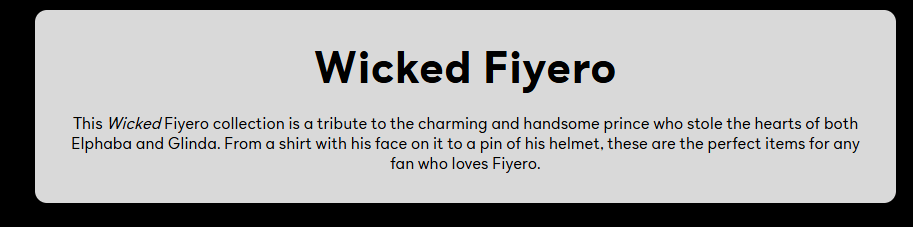
Further, the NBC Wicked merchandise webpage participates in the network of adaptations because it actively reshapes the narrative and characters of Oz through the products it presents, effectively authoring a new version of the story for its audience. Rather than simply selling its items, the website also curates short passages that give short descriptions of each character. The one for Fiyero reads, “a tribute to the charming and handsome prince who stole the hearts of both Elphaba and Glinda” (NBC). Even through simple passages such as this, the website changes how its audience engages with the story by leaving out other aspects of the film that are important to Fiyero’s character, such as his love for Elphaba. This demonstrates that rather than simply selling items, the website curates specific visuals and thematic elements to construct a consumable narrative. When we take a closer look at the merchandise that depicts the friendship between Elphaba and Glinda, we see how the site reframes their relationship as one of similar identities in complementary and marketable harmony. This narrative does not exist in the same way in Baums novel, or even in Maguires novel which is the source text for both the film and the Broadway musical. Instead, it is produced through website specific design and branding choices. Even Glinda’s character passage states, “this collection is a tribute to the character who taught us the power of friendship” (NBC). Simone Murray uses her novel The Adaptation Industry: The Cultural Economy of Contemporary Literary Adaptation to discuss ‘industrial authorship’ over adaptations such as this one. She highlights the ‘Author as Promoter’ using the 202 film Adaptation as an example. She writes that “author function has become so culturally ubiquitous and commercially serviceable…it becomes increasingly futile to try to discern where the previously distinct entities of ‘author’, ‘book’ and ‘film’ begin or end” (Murray 47). This supports the understanding of the site as an adaptation by explaining how media industries increasingly function as authors of a text, having the ability to shape stories across platforms through specific strategies and by using cross-media circulation. Murray further exclaims that “a new generation of writers is seeking to turn the massifying logics of the adaptation field to their cultural and commercial advantage” (Murray 43), exemplifying the idea that creators of merchandise and thus merchandising website are starting to be recognized as authors of adaptation. Merchandise becomes the story that they are selling for their commercial advantage, which aims to reach the cultural audience. The merchandise webpage becomes a form of ‘industrial’ author of Wicked, retelling the narrative through images, slogans and aesthetic objects that help to guide consumer interpretation. The site operates as an adaptive text that uses merchandise to rewrite Wicked in a form that aligns with American culture and the logic of the adaptation industry.
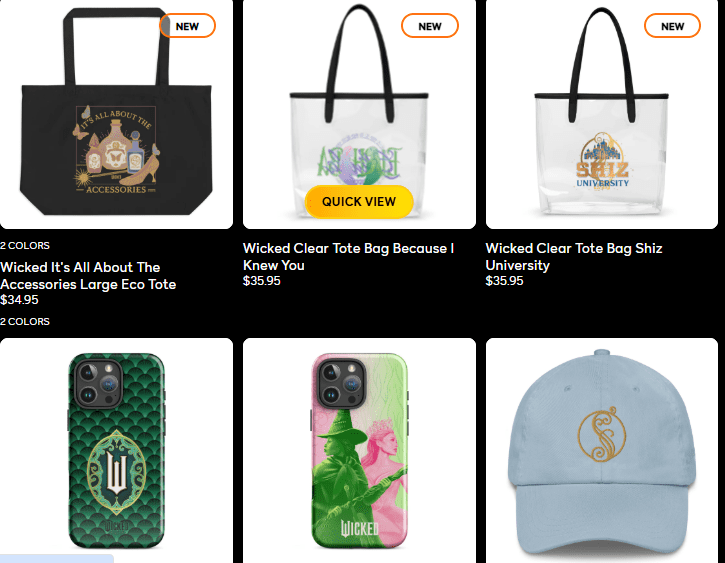
The adaptive power of the NBC Wicked merchandise website becomes more evident when it is placed within the broader network of Oz adaptations. Across all these versions, motifs such as color symbolism, friendship, moral ambiguity, and spectacle are reshaped. The merchandise webpage enters this adaptive lineage by selecting which meanings to preserve or alter. Looking at how to website sets up Glinda’s ‘aesthetic’, featuring pink water bottles and glittery tote bags, reveals how the site extends the MGMs film emphasis on Glinda’s glamour while removing the political complexity of Maguires novel. It does a similar thing to Elphaba, especially items depicting her silhouette soaring skyward, which visually depicts the iconic “Defying Gravity” staging from the musical which has been transferred to the first Wicked film. This differs from the moral complexity of Maguires text, which guides the audience toward an empowered reading of her identity. This adaptation mirrors Kamilla Elliotts description of tie-in merchandise in that it “incorporates imagery from the film in the merchandise itself” (Elliott 196) and “creates ‘character’, endowing consumers with an object-based ‘personality” (Elliott 198). To clarify, functioning as an intertextual adaptation allows the motifs of the story to become condensed and recirculated through physical objects that incorporate these visuals from the film into consumable goods that recreate the meaning of the character. Drummonds argument surrounding Oz’s marketing history and how it shapes the American cultural narrative also helps explain why this adaptation matters. He states that “commercial vitality depends upon an artifact’s ability to adapt itself over time to new markets… Oz’s cultural sustainability depends on micromarketing” (Drummond et.al 17). This statement clarifies why the sites selective branding of characters such as Glinda and Elphaba matter. The webpage becomes a direct example of ‘micromarketing’ because it tailor’s themes from the movies into contemporary tastes and values of the consumer. By emphasizing empowerment, optimism, and friendship, the merchandise webpage aims to attract a new audience, depending on this form of adaptation to make its money in a new market. It aligns Oz with American values and reproduces the story as a form of reinvention. Simone Murray notes in her discussion of authorship that specific choices place the page firmly within the creative network of adaptation because it functions as an authorial agent that produces narratives across a platform. She writes that
every aspect of the contemporary adaptation economy functions to expand and replicate the authorial celebrity’s role in other media platforms: legally, the creative work is conceived of a bundle of separable and individual alienable IP rights…the push to achieve synergy invites cross-promotion and adaptation of content into myriad simultaneously circulating forms (Murray 49).
Simply, the NBC Wicked merchandise webpage works as an adaptation because it shows that authorship today extends beyond the writer and into the industrial system that circulates the story within the media. The webpage then performs its own authorial labor by taking narrative elements from the films and transforming them into new and consumable objects. It isolates specific narrative fragments and repackages them into individual marketable units and then circulates these as products that reinterpret the meaning of the characters. This reinforces the idea that the site’s adaptive storytelling is not accidental but is a built-in feature of how modern adaptations operate within a cross-media marketplace. Taking all these ideas into account, we can better understand that the sites carefully curated images, slogans, and character aesthetics reveal that it is not merely referencing Wicked and Wicked: For Good but actively adapting it.
Viewed within the broader network of Oz adaptations, the NBC Wicked merchandise webpage emerges as a crucial node that not only circulates familiar themes but reshapes them into a distinct American narrative about identity, aspirations, and self-definition. From Baums original novels optimism to the MGMs film technicolor spectacle to the Broadway musicals revision of Maguires popular novel, each major iteration of Oz has reinterpreted the story in ways that reflect the cultural climate of the moment. The merchandise webpage continues this adaptive lineage by transforming narrative symbols into a lifestyle marker that encourage consumers to inhabit Oz’s values through everyday objects. Close readings of items such as empowerment-themed Elphaba apparel or Glinda’s glittery accessories demonstrate how the site fuses personal branding with narrative meaning, reframing Oz as a story of self-made identity and aspirational transformation, which are core aspects of the American cultural narrative. These products do more than reference the narrative; they materialize it, turning themes of resilience and friendship into wearable declarations that extend beyond the stage or pages. Doing so, the webpage participates in what adaptation theorists like Elliott, Drummond, and Murray collectively describe as a contemporary adaptation economy where meaning is produced across multiple platforms that inserts its own authorial influence. This NBC Wicked merchandise webpage then acts simultaneously as an adaptive text and a cultural agent by shaping how Americans interpret Oz, embedding themes into consumer practices that reinforces the nations ideal of individuality, empowerment and ongoing reinvention.
These perspectives help to make it clear that the NBC Wicked merchandise webpage operates as a meaningful participant in the broader network of Oz adaptations. Instead of functioning as a simple promotional outlet, the site actively reshapes recognizable themes, such as Glinda’s optimism and Elphaba’s defiance, into new narrative expressions. Elliotts model of intertextuality helps explain how the themes embedded within the merchandise take on a new interpretive force. Drummonds discussion of micromarketing situates this practice within Oz’s long-standing pattern of facing cultural reinvention. Murray’s concept of industrial authorship clarifies how the site contributes to its own influence within the adaptation community. Viewing this site through these theoretical frameworks allows the webpage to emerge as a contemporary adaptive text that extends Wicked and Wicked: For Goods themes into the material culture while reinforcing specific American narratives of empowerment and identity. Recognizing the merchandise site as a form of adaptation encourages a more expansive understanding of how stories can evolve across different types of media and underscores the role of the commercial platform in shaping the ongoing cultural life of Oz.
Works Cited
Drummond, Kent. The Road to Wicked: The Marketing and Consumption of Oz from L. Frank Baum to Broadway. Palgrave Macmillan, 2018.
Elliott, Kamilla. “Tie- Intertextuality, or, Intertextuality as Incorporation in the Tie-in Merchandise to Disney’s Alice in Wonderland (2010).” Adaptation (2014): 191-211. Article.
Murray, Simone. The Adaptation Industry: The Cultural Economy of Contemporary Literary Adaptation. New York: Routledge, 2012. Book.
NBC. Wicked The Movie Merchandise. 2025. https://www.nbcstore.com/collections/wicked?gad_source=1&gad_campaignid=21890117420&gbraid=0AAAAADJMNJw9sj3gGLrh-d7ujMxizR7Fw&gclid=CjwKCAiA_dDIBhB6EiwAvzc1cCtzcxHWsSzdilKdKJFjAXWY4ot82csd2XSrwsKGBtsr5uLi5ph_kxoC7QQQAvD_BwE. November 2025.
 Sabre's Critical Essay